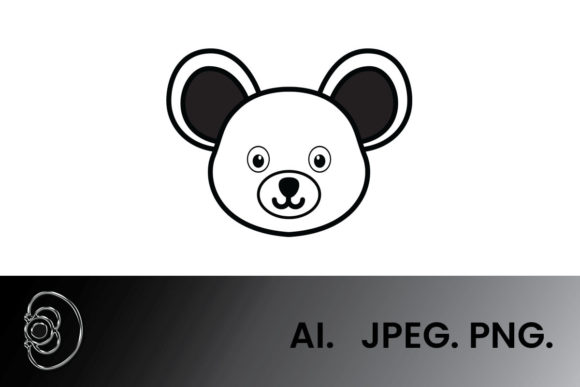
Black and White Animal Mouse Head: A Versatile Vector Asset
There’s a certain charm to a well-executed animal graphic. It’s instantly recognizable, emotionally resonant, and carries a personality that text alone often can’t convey. The Black and White Animal Mouse Head graphic is one of those design assets that feels both classic and endlessly adaptable. It’s a simple, bold silhouette—a mouse head in stark monochrome—that manages to be playful without being childish, and sophisticated without being sterile. This isn’t just a clipart image; it’s a foundational piece for a wide range of creative projects.
What makes this particular asset so useful is its core visual language. The black and white palette is the ultimate in versatility. It integrates seamlessly into any color scheme, provides maximum contrast for legibility, and ensures the graphic looks just as crisp on a screen as it does on printed paper. The style leans toward a clean, modern illustration—think of it as a display font for imagery. It has a clear personality: curious, alert, and friendly. The lines are confident, the shapes are balanced, and the overall appeal is one of clean, professional simplicity. This is a creative font in visual form, ready to anchor a design.
Where This Graphic Finds Its Home
The applications for the Black and White Animal Mouse Head are surprisingly broad, touching nearly every corner of the creative and commercial landscape. For logo design, it’s a natural fit for pet shops, veterinary clinics, tech startups (playing on the computer mouse concept), children’s brands, or eco-friendly companies. The monochrome vector file ensures the logo remains sharp and recognizable whether it’s scaled to the size of a business card or a billboard.
In packaging design, this graphic can become the friendly face of a product. Imagine it on a bag of artisanal cheese, a line of organic snacks, or even a whimsical stationery set. It adds a touch of character and approachability. For editorial design—think magazines, blogs, and newsletters—it works beautifully as a recurring motif, a section header icon, or a spot illustration. It breaks up text-heavy pages with a visual anchor that guides the reader’s eye.
Digital spaces are where it truly shines. As part of social media graphics, the mouse head can be used in profile pictures, post templates, story highlights, and animated stickers. Its simple shape makes it perfect for creating consistent, recognizable branding across platforms like Instagram, Pinterest, and TikTok. For web design, it can be incorporated into favicons, section dividers, or custom icons within a user interface, adding a layer of personality to the digital experience.
The Strategic Impact on Your Brand
Choosing a central visual like the Black and White Animal Mouse Head is more than an aesthetic decision; it’s a strategic one that influences how your audience perceives you. Consistency is the bedrock of strong brand identity. By using this graphic across your touchpoints—from your website header to your email signature to your printed invoices—you create a cohesive visual language. This repetition builds recognition. Over time, your audience will associate that friendly, clean-lined mouse head with the quality and personality of your brand.
The graphic also plays a key role in establishing visual hierarchy. In a crowded design, it can act as a focal point, immediately drawing attention and setting the tone. Paired with a clean sans serif font for body text and a more expressive script font for accents, it helps organize information logically and pleasingly. This thoughtful arrangement enhances readability and makes your message more accessible, which is crucial for audience engagement. A professional, well-considered visual identity, anchored by a asset like this, signals credibility and care, which strengthens brand perception.
Practical Guidance for Using This Asset
Before diving into a project, take a moment to evaluate if this is the right fit. Does the mouse metaphor align with your brand’s story or the project’s theme? If you’re a tech company, it’s a clever nod. If you’re an artisan baker, maybe less so. Context is everything. Once you’ve decided to proceed, the included file package is your toolkit. The EPS vector file is your master asset. This is the file you’ll open in Adobe Illustrator or similar software to edit colors, adjust shapes, and, most importantly, resize without losing quality. This is non-negotiable for professional print work and large-scale applications.
The PNG file with a transparent background is perfect for digital use—layering it over photos, adding it to social media posts, or placing it on a website. The JPEG is a great universal format for quick drafts, emails, or situations where a transparent background isn’t needed. The PSD file (Photoshop Document) might include the graphic on its own layer, offering another way to integrate it into raster-based design workflows.
Think about font pairing if you’re combining it with text. The clean, bold nature of the graphic pairs well with a variety of typefaces. A sturdy serif font can give it a classic, editorial feel, while a geometric sans serif font will amplify its modern, clean lines. A flowing script font could add a touch of elegance or whimsy. Always test your combinations at the actual size they’ll be used to ensure legibility and harmony. Finally, even though this is a premium font-style asset, always double-check the license for your specific use case, especially if it’s for a large commercial run or a product for resale. Understanding the terms of use is part of professional practice and ensures you’re leveraging your design assets correctly.
In the end, the Black and White Animal Mouse Head is more than just a picture of a mouse. It’s a versatile tool for storytelling, a building block for identity, and a shortcut to adding polished, professional character to your work. Its strength lies in its simplicity and adaptability, making it a valuable addition to any creative’s library.